Death Stranding 2 proves that games are an art form – and not all art is for all people.
If you liked Death Stranding you will certainly like Death Stranding 2. I never felt that DS1 was incomplete, or any kind of “tech-demo”, but DS2 certainly feels more fleshed out and consequently more impressive. Kojima has been able to develop the mechanics of the first game into a truly manic sandbox of possibilities. Whether the narrative has been able to evolve similarly is much less clear.
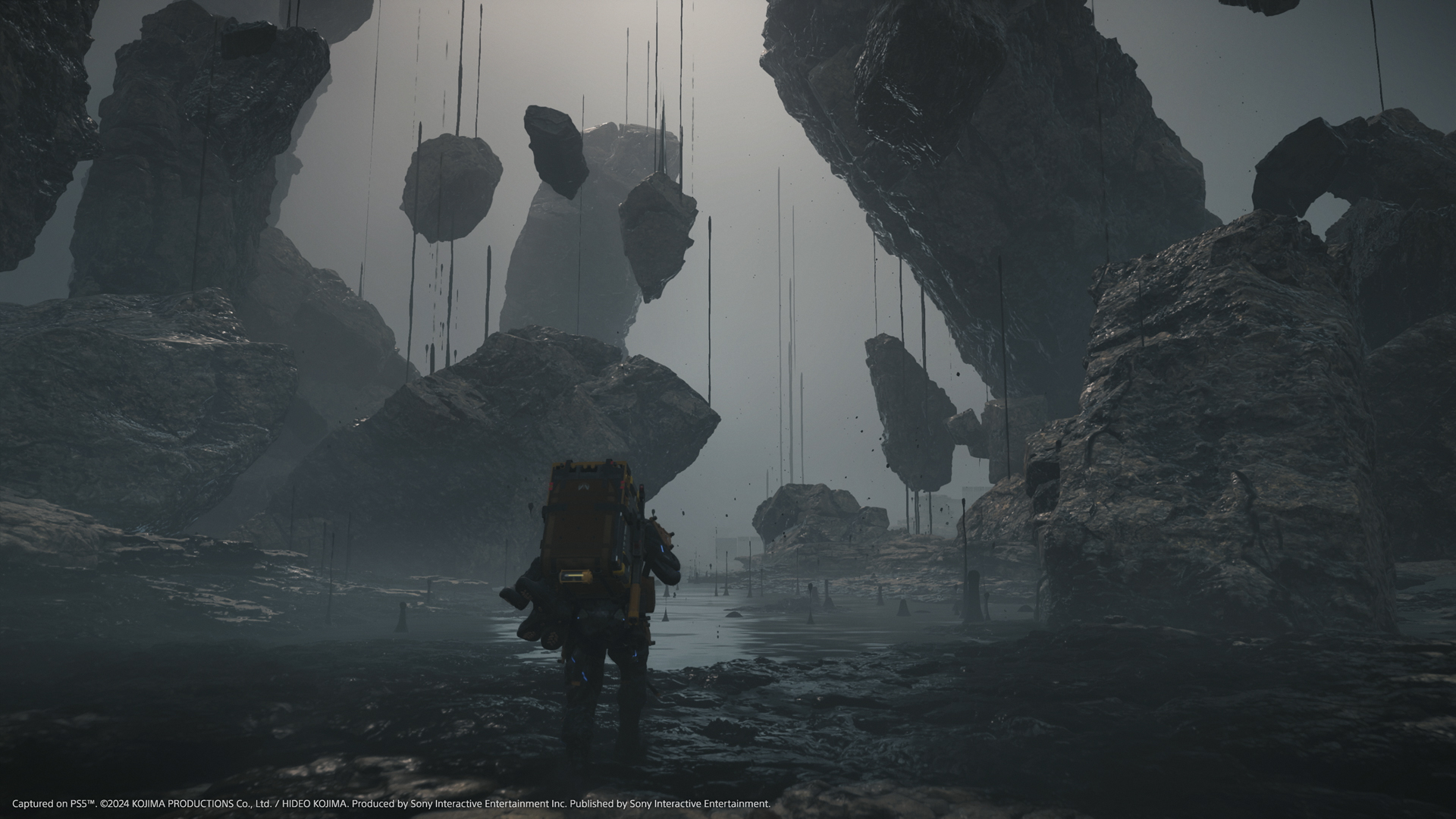
Death Stranding 2 unleashes players into Mexico, and subsequently Australia. To me – as someone who had enjoyed DS1 and had long enough away to forget my gripes – it felt like putting on a comfortable old jumper. I was once again marching across beautifully rendered landscapes, linking up facilities in return for a variety of rewards: some were simply numbers going up, but others were often meaningful new tools and upgrades to further help my advancement. The sheer scale, variety and imagination present in the weapons and tools to be unlocked is remarkable. As a fan of the art-form, I enjoyed the throughline of crazy sandbox/toolbox development from Metal Gear Solid 5, to DS1, to this game. It was a real thrill to be dragged into an unexpected combat-stealth sequence when I wasn’t geared up for it. I had an item in my inventory with a secondary use that, if applied carefully, allowed me to scrape through. I appreciated the flexibility this kit offered.
At first I was a little shocked at how similar to DS2 is – and how quickly you acquired the same tools as before. However, as the game progressed I could see how Kojima had layered additional material into the substrate of the first game in a way that was ambitious, novel and satisfying.
One can certainly see that the game was made with accessibility in mind – everything seems to flow a little more easily than the first game. I was never able to pin down how much of that came to me because I was a returning player. Mechanically the game was more of the same – not necessarily a bad thing – with newer content sprinkled in as you progressed. For instance, I was aware that the menus could overwhelm with information, but roughly where to look to find the key bits. Narratively, the story begins much more straightforwardly – though, again, having played DS1 the world was already built in my mind, and was a stage against which a new story could unfold. This may not be true for a brand new player.
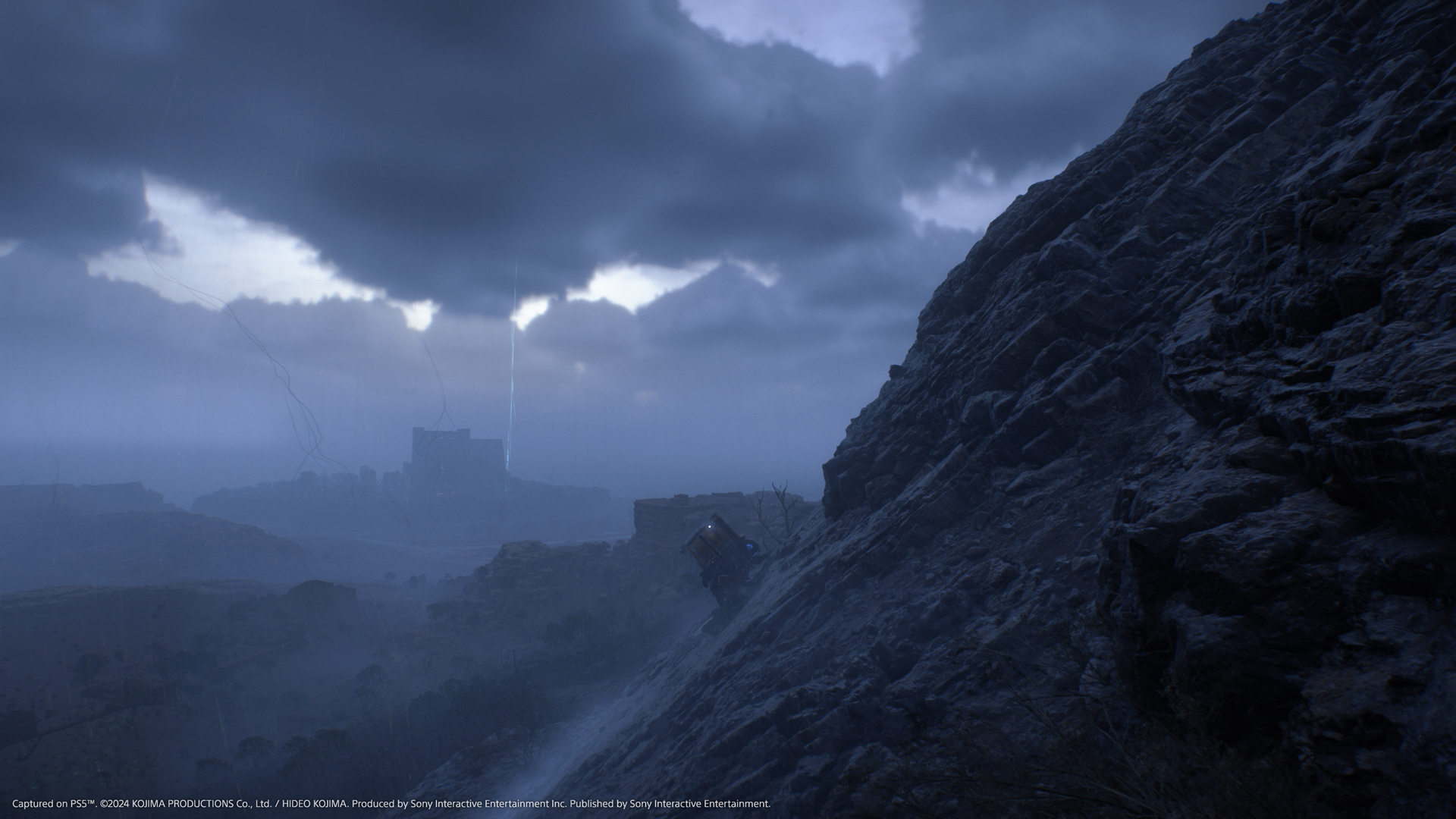
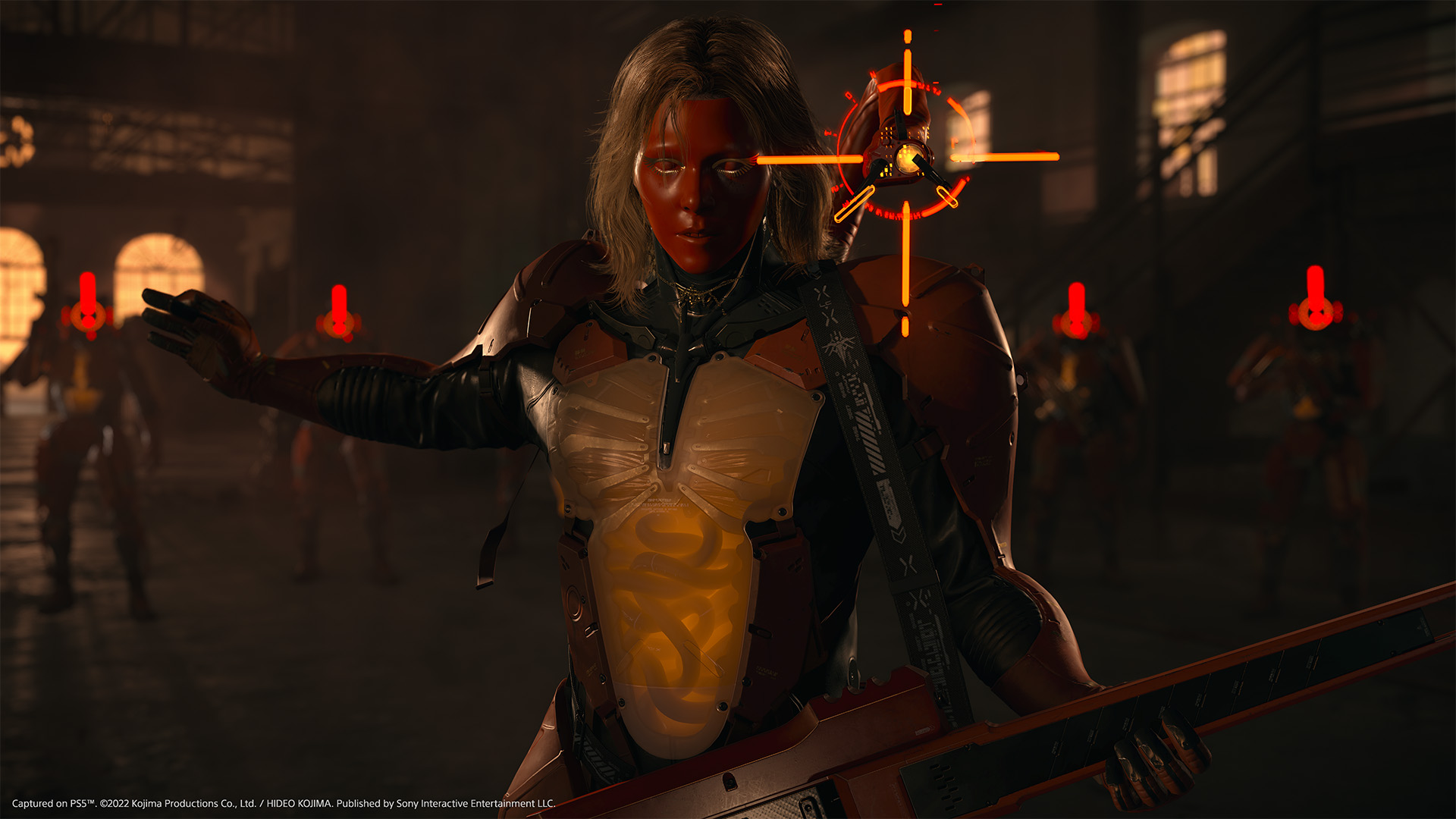
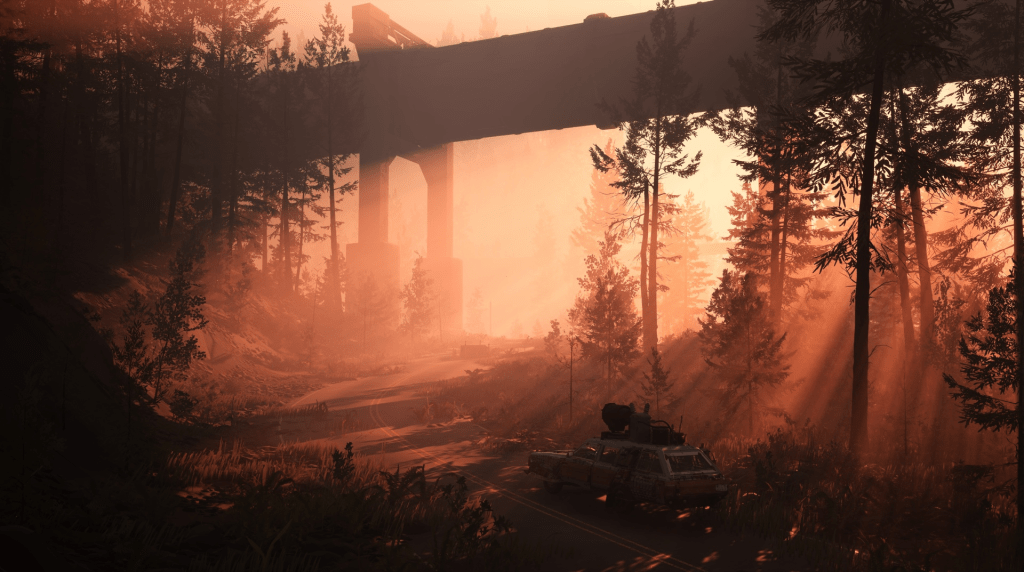
So I set off into this fresh but familiar world, linking up bases and clearing enemy camps with my growing array of fun and interesting tools at my disposal. I’m always a little wary of Kojima’s story-telling, but as I settled into the first third of the game I was reminded to just think of this as a live-action anime; to let the madness wash over you, enjoy the bombastic set-pieces and wait for the next, inevitable, unhinged moment. Indeed, the story begins relatively straightforwardly, a relief after the chaotic, worldbuilding exposition dumps of the early first game. I will note further that the game is visually breathtaking from the start and does not let up – from the variety of landscapes, to the character design, to the future-industrial facilities, it never stops being stunning. The music also is a delightful mix of composed pieces and licensed work. It is highly curated and – in a game where tone can be an issue – acts as a fantastic stabilising influence. Elsewhere, however, cracks begin to show.
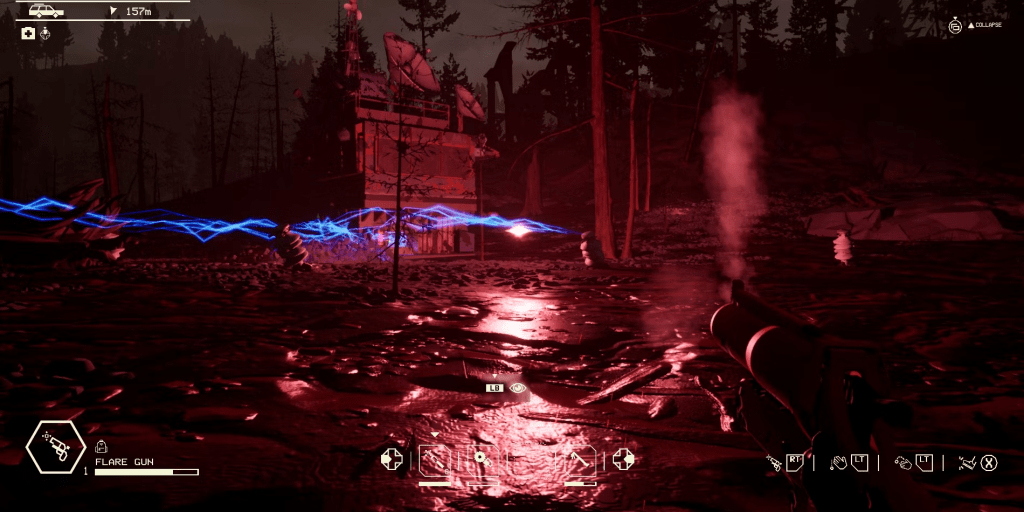
Firstly, despite the inventive and numerous tools that protagonist Sam Porter Bridges is provided with, they all achieve the same goals (of which in combat there are two: knocking out humans and blowing up robots). You can achieve these goals with the starting equipment, and – due to the lack of mission variety (discussed later) – there is very little reason to change things up. I suppose this is a case of making your own fun, and using the different weapons and gadgets just because you can, but it would have been nice if Kojima had given us a reason to do so. I played the game on normal difficulty, and honestly it felt like if you were doing anything other than walking into a base and mowing every enemy down with your highest powered automatic weapon, you were wasting your own time.
Which raises the next issue: Does Kojima respect your time? The answer is “no”. This is a game full of donkey-work almost by definition, and there is simply too little variety in the game to justify it. At the time, I felt that completing side quests was useful, since I was unlocking gear that would make my onward journey easier. Looking back over all my time with DS2 now, I realise that it was in fact unnecessary, and I could have marched on a mainline track to the end of the game, without that side stuff and without missing much.
An easy fix for this would be to make the side missions more interesting, varied, and in particular challenging. Ranking up your rating with each facility requires dozens of deliveries, many literally identical. It is repetitive and unrewarding – especially since you get very little in return for reaching the fifth star. Why not make the missions harder to get the higher ranks? Missions that force you to use all the tools at your disposal.
“I cannot overstate what an unbelievable amount of cutscenes are dedicated to filing systems in this game.”
This has knock-on effects to the narrative, which began to lose me at the midpoint of the game. Around this time you have uncovered so much of the map, and have so much to do, that you can spend hours without seeing any story content. This is a negative feedback loop: I’m not that interested in the story, so I go and do other stuff, so when I get back to the story I’m even less connected with it, so I go and do other stuff. There is simply no getting around the fact that Kojima Productions has paid A-list actors to spend literally hours talking about how a fictional government organises its filing system. I cannot overstate what an unbelievable amount of cutscenes are dedicated to filing systems in this game.
Not to be too negative, the really impactful stuff never failed to please. I don’t want to spoil anything, but from start to finish this game contains ideas, images, action sequences and dialogue that left me in disbelief at what I had seen on the screen. I commend in particular the sequences near the end of the game, drawing from Inception-style playable set-pieces and some general anime insanity. These moments will stay with me for a long time. It definitely didn’t all work, but I always admired Kojima’s ambition in trying to pull it off.
On the other hand, I was occasionally left wondering: “How the hell did he think he was going to pull this off?” Tonally, the game is absolutely all over the place and explores some of the darkest possible themes. It would take a generational talent with the deftest narrative touch to walk the line between laugh-out-loud grandiosity and the (attempted) narrative weight present here. Kojima is not that person, if it can be done at all. This probably contributed to the surprising lack of feeling I experienced toward this story – by swinging for both ends of the spectrum it achieved neither.

Where I found the first game’s story actively aggravating, it is perhaps worse that I found the story of DS2 leaving me fairly switched off and neutral. An epic cutscene would play out, some lines of (undoubtedly well acted) dialogue would be delivered, swelling music would play at the point of a revelation, and I would find myself saying to myself: “Ok…?” Sometimes the narrative beats simply do not hit, a problem in itself but leading to a greater issue of alienating me as a player, and making me feel outside the game. As if this game is for other people, Kojima and his fans, but not for me.
To further add to the pacing concerns, and to give a minor but unsurprising spoiler, Kojima pulls the same move he did at the end of DS1 by demanding the player retrace their steps through the 50+ hour game they just worked through. No doubt this is intended as a time for the player to reflect on the themes and revelations of the game, but in a game that is already overlong this is not a positive.
There is no doubt that Death Stranding 2 is a monumental achievement, made with love and care to a high standard of quality, at the hands of an auteur designer. The sheer force of Kojima’s imagination and personality is present in every moment of this game. It is, without doubt, a work of art. However this does not make the work accessible to everyone, it does not make it coherent or masterful. To have the experience of playing this game is essential for fans of videogames as a medium, but not everyone will like it.



 JH
JH 